
Touched Out: A Sensory Ranking for Moms Who Are One Shriek Away From Transcending
Sometimes your baby does something innocent—like placing their damp mouth on your arm—and your entire nervous system screams. Being touched out isn't about love. It's about your sensory system reaching capacity. Here's my ranking of baby sensory experiences that make my autistic brain tap out.

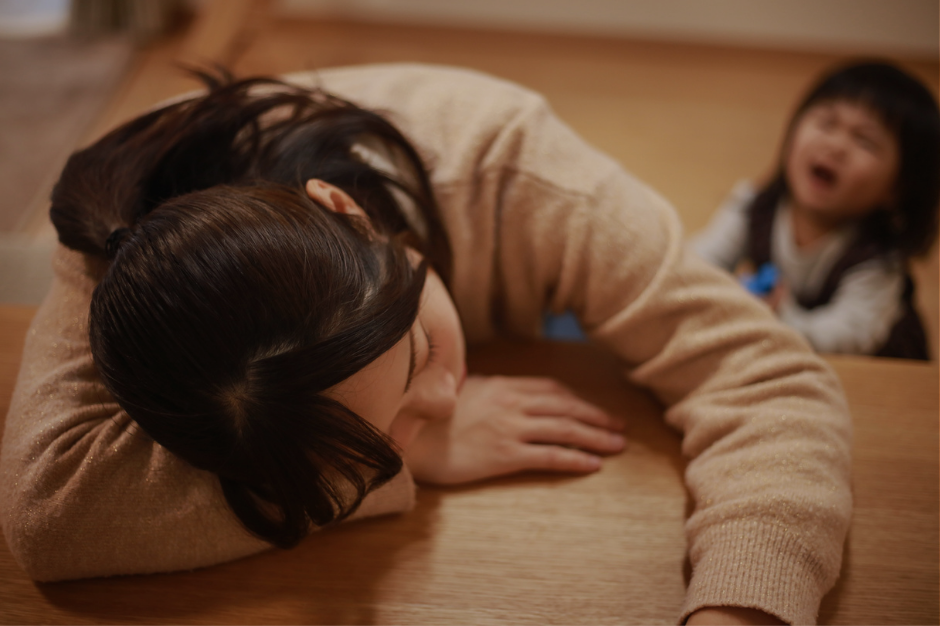
Here’s something nobody warned me about: sometimes your baby will do something utterly innocent — like gently place their damp little mouth on your arm, or breathe too wetly in your direction — and your entire nervous system will respond like someone just set off a car alarm inside your skull.
Last week my son discovered spit bubbles. Now he does them constantly. Loudly. Proudly. While maintaining unblinking eye contact. This morning, one of his celebratory bubbles actually landed on my forearm, and I had to put him down and walk into another room because I couldn't. I could actually feel my jaw clenching so hard my teeth hurt.
I love this boy. I grew him in my body. I chose to keep him alive every single day. And also: sometimes the sensory experience of his existence makes me want to peel my own skin off.
Being touched out isn’t about love or commitment or how good of a mother you are. It’s about your nervous system reaching capacity. You’ve been touched all day — nursing, diaper changes, being climbed on, having food-covered hands dragged across your face, the works. Your sensory threshold has limits, and babies are incredibly demanding creatures who do not understand the concept of personal space.
So here’s my completely unscientific, deeply personal ranking of baby-related sensory experiences that make my autistic nervous system tap out entirely.
The Rankings (Worst to “Fine, I Guess”)
Tier: Instant Sensory Meltdown
1. BLW Food Hands on Your Face (10/10 Nope)
The combination of wet, sticky, and warm all at once is genuinely overwhelming. But here’s what makes it worse: they’re not just accidentally messy. They seek you out with their food-covered hands. They want to touch your face specifically. They want to share this experience with you.
The slime transfers immediately. It gets in your hair if you’re not fast enough. There’s a slight suction sound when they finally pull away. And now you’re sticky. And you can’t wash your face right this second because you’re still mid-meal. And they’re about to grab you again.
Not gonna lie, this is the sensory experience that makes me understand why some animals eat their young.
2. The Bite (Squidward Micro-Nibble Style) (9/10 Nope)
This isn’t a full chomp. I'm talking about that tiny, delicate nibble Squidward does when he’s testing the Krabby Patty — where he barely opens his mouth, touches his front teeth to it, and pulls a microscopic piece away.
That’s what my son does to my inner arm, thigh, literally any skin area he can get his grubby little hands on. A gentle, investigative bite. His little rat teeth just press in slightly and then pull at the skin. He’s not trying to hurt me. He’s sampling me. Testing what happens.
It’s the precision that makes it unbearable. I can feel exactly where each tooth is. The pressure is light enough that it shouldn’t bother me, but my brain cannot stop tracking every micro-movement. It’s somehow so much worse than a real bite because it goes on longer and I’m just sitting there experiencing it.
3. Post-Solids Diaper (8.5/10 Nope)
The foulness is absolutely tactile. You’re not just smelling it — you’re experiencing it with your hands. Sometimes it’s still warm. Sometimes it has traveled to places that shouldn’t be physically possible given how a onesie is constructed. Sometimes the consistency is exactly what you feared it would be, and sometimes it’s somehow worse. Sometimes it gets on you, and your brain immediately freezes, trying to process what the hell just happened and how to best proceed while your baby is just butt naked staring at you.
Your entire body is screaming “I DIDN’T SIGN UP FOR THIS” even though you definitely did. This is just the part of parenting that no one adequately explains beforehand.
Tier: Tolerable But Depleting
4. Skin Pinches and Nail Rolls (7/10 Nope)
They grab a tiny fold of skin on your arm between their fingernails and just roll it. Slowly. Methodically. Like they’re testing high-quality fabric before making a purchase decision.
It’s not painful, per se. It’s just so specific that your brain cannot ignore it. You become hyper-aware of that exact spot on your body. Every tiny movement registers. You can’t think about anything else until they stop, and they never stop on their own — you literally have to physically redirect their hand.
This is the sensory experience equivalent of having a single hair stuck to your face that you can feel but can’t see.
5. The Pterodactyl Shriek (6/10 Nope)
The shriek doesn’t just go into your ears — it vibrates through your entire skeleton. It’s sharp and sudden and often happens right next to your head when you’re already holding them.
Bonus points when it’s paired with a slap or a grab, which makes it a full multi-sensory assault. Not only are you hearing it, you’re experiencing it with your whole nervous system. The sound physically hurts in a way that makes you want to put them down and walk away immediately.
6. Wet Mouth Sounds from Spit Bubbles (5/10 Nope)
He’s not doing anything to me. He’s just existing. Sitting there vibing. Making these wet, poppy mouth sounds while he practices his new skill. Little bubbles forming and popping. Over and over and over.
I can hear the saliva. I can hear his little tongue moving. Each sound registers in my jaw and behind my eyes. It’s like someone chewing with their mouth open directly next to your ear, except it’s your own baby and you’re supposed to find it cute.
I know this is developmentally appropriate. I know he’s learning. I also know that if he doesn’t stop soon I’m going to have to leave the room and stare at a wall for five minutes.
Tier: Fine, This Is Parenthood
7. The Aggressive “Gentle” Pat (3/10 Nope)
They learned “gentle touch” and they’re genuinely trying to apply it. But their version of gentle is still a full open-palm smack to your face at unpredictable intervals. Sometimes on your cheek. Sometimes directly on your mouth. Sometimes on your glasses.
The effort is what makes it tolerable. They’re doing their best. You can also redirect this one pretty easily, which helps. “Gentle means soft, like this” only works about 40% of the time, but hey, at least it’s an option.
8. The Cling (2/10 Nope)
When they just want to be held and they’re not actively doing anything to you — just existing on your body. Breathing on your neck. Resting their full weight on one of your arms. Being a small, warm barnacle.
This one’s mostly fine for the first twenty minutes. After forty-five minutes your arm is asleep, you need to pee, you’re starting to sweat, and you’re touched out in this slow, cumulative way that you didn’t see coming.
What’s Actually Happening (The Science-ish Part)
When I say “touched out,” I mean your sensory system has reached its processing limit. This is particularly true for neurodivergent parents — especially autistic parents — who often have different sensory thresholds and less tolerance for repetitive or unexpected stimulation.
Your nervous system can only handle so much input before it starts sending distress signals. Touch is input. Sound is input. Smell is input. When you combine all three (like during a diaper change with a shrieking baby who’s grabbing your face), your system gets overwhelmed.
There's no arguing about whether you love your kid or not. This is about capacity. Your brain has a certain amount of bandwidth for sensory processing, and babies require a lot of bandwidth. They’re touching you constantly, making noise constantly, requiring your attention constantly. There’s no break. There’s no transition time between one sensory experience and the next.
For neurotypical parents, this might just feel like “mom life is exhausting.” For neurodivergent parents, it can feel like your entire nervous system is on fire. Neither experience is wrong. Both are very real. And both require the same solution: boundaries, breaks, and permission to need space from your own child.
What Actually Helps
I’m not going to give you a whole system here (this is supposed to be a quick read!), but here’s what makes the difference for me:
- Name the boundary in real time. When my son grabs my face with food-covered hands, I move them to his tray and say “hands here.” It doesn’t always work, but it helps me feel like I have some control over what’s happening to my body.
- Build in recovery time. If I’ve been touched all morning — nursing, diaper changes, playing on the floor where he’s constantly crawling on me — I need at least ten minutes alone before the next round. Even just sitting in a different room with the door closed helps. My nervous system needs time to reset between high-touch activities.
- Say it out loud. When I’m touched out, I name it. “I’m overstimulated, I need a minute.” I’m not saying this to my baby (he’s eight months old, he doesn’t care). I’m saying it to myself, or to my partner. Naming it stops me from spiraling into “I’m a terrible mother” and reframes it as “I’m managing a real thing that has a real solution.”
- Plan around high-touch moments. I know that mealtimes and diaper changes are going to be sensory chaos. I try not to stack them back-to-back with other high-touch activities. I don’t schedule anything immediately after that’s going to require me to be touched more. This is just basic energy management — knowing what depletes you and planning accordingly.
- Figure out what else is draining you. Sensory overload doesn’t exist in a vacuum — it’s compounded by all the invisible mental labor you’re carrying. The Mental Load Audit for Moms is a free checklist that helps you identify exactly what’s maxing out your system. You can’t manage what you can’t see.
If you’re in the newborn phase and completely overwhelmed, having a tool to help you think through solutions when your brain is nonexistent can be a real lifesaver.
Not Sure What’s Actually Draining You?
Sensory overload is just one piece of the puzzle. The invisible mental labor you’re carrying — the planning, the remembering, the decision-making, the emotional regulation — all of it compounds the overwhelm.
Take the Mental Load Audit for Moms — a free 1-page reflective checklist that helps you identify exactly what’s maxing out your system. Because you can’t fix what you can’t see.
It takes about 10 minutes, and for the first time, you’ll actually see what you’re carrying.
Being touched out simply means your sensory system has limits, and babies are incredibly demanding on those limits. That’s just true. Once you stop pretending it’s not happening, you can actually do something about it.
And if you’re finding that your usual coping strategies aren’t working anymore, that might be a sign you’re entering a new developmental phase.
Now if you’ll excuse me, I need to go wipe mashed potato off my glasses and sit in silence for seven minutes.
Written by Shae — AuDHD alt millennial mom, developer, M.S. in Psychology. Building practical tools that translate research into survival systems for neurodivergent parents.